There’s a lot of different training options for dogs: group classes, private lessons, board and train. It can be confusing and hard to know what’s best for your dog. Over the next month, I’m going to break down what each one of these is, and how to figure out which one best fits your dog and lifestyle.
I’ve been on both sides of training, as a dog owner and as a trainer, and I’ve used and taught in all three types of training. Not every option is right for every dog, and likewise not every trainer is right for every family.
Here’s a quick, and very generalized, break down before we start our first deep dive.
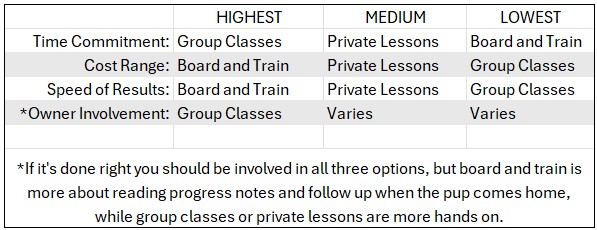
Board and Trains
So what is a board and train program?
A board and train program is where your dog stays with a trainer for a set period of time. Some companies have them at a large facility, but at The Dog Trainer Near Me, we have the dogs live at our homes. Board and trains can range from a short basic two week program, up to twelve weeks or even more depending on the goals.
Board and trains should be done by professional trainers who train dogs as their full-time job. The dog receives daily, one-on-one training. We adjust this to each dog and the specific goals for them, but most dogs spend several hours training each day. Think of it like boot camp. They still have some play time, but they are working and learning most of the day.
This gives dogs the fastest change in skills and behavior modification. The expectations are set from day one and you can see huge changes in behavior and obedience very quickly.
Most dogs enjoy this high energy, but structured environment. We spend the first few days building a relationship, and teaching communication skills before we ever start command work. Aggressive and reactive dogs especially thrive in this environment where they know very quickly what to expect.
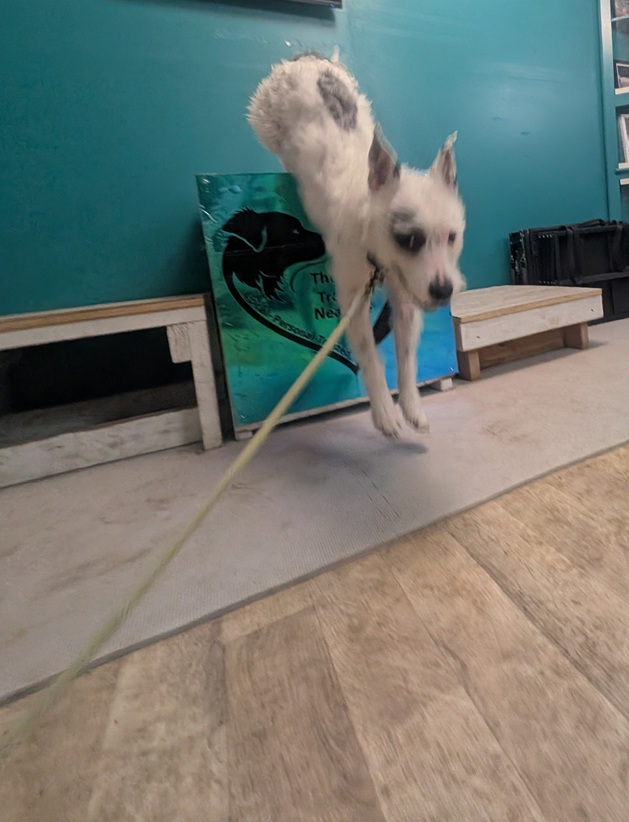
There’s consistency from a trainer, so only the dog is learning new things and not both the dog and owner at the same time. This means owners do not have to worry about accidentally reinforcing behaviors they don’t want, and can focus instead on maintaining what their dogs have already learned.
It’s extremely useful for professionals with busy work schedules, or families that just don’t have enough time to spend but still need their dog trained. The total time commitment is very low.
When your dog comes home, there’s typically one big lesson followed by one or two more private lessons a few weeks later to make sure you and your dog are communicating well. Daily training is very low, since you’re maintaining rather than training.
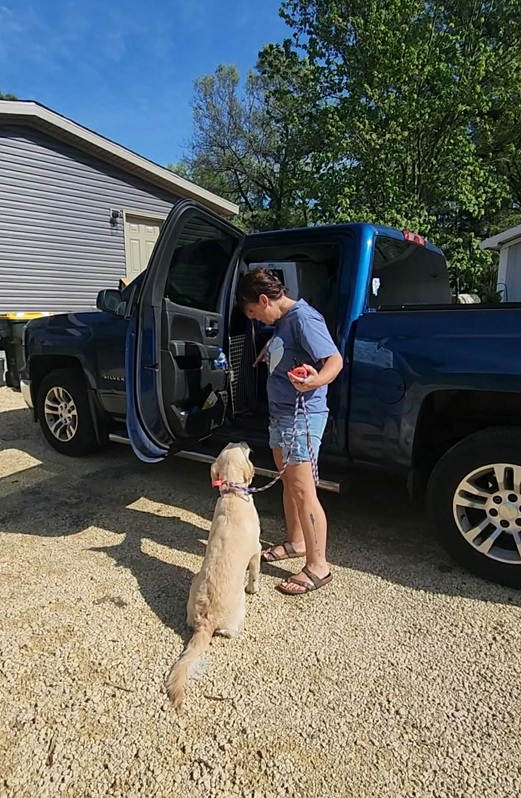
There are negatives as well. The biggest hurdle most people have is the cost. The price of a board and train is significantly higher than any other training type. The reason for this is the amount of time your professional trainer will be putting into your pup. Depending on the goals, this might be the only dog your trainer has at that time.
Owner involvement can be low during training, and it’s easy to feel less connected. We give you printed homework so you’re ready when your dog comes home. You’ll also receive daily updates with videos, pictures, and information to keep you in the loop. After your dog’s board and train is complete, you’ll receive private lessons with the trainer to help you maintain the training, and there are several options for continuing if you want to learn more.
A board and train is very well suited for people with limited time or people who need their dog trained quickly. Board and trains can also be useful for people who want their dog to learn specific advanced skills, but do not have the time or ability to teach them at home or to attend group classes.
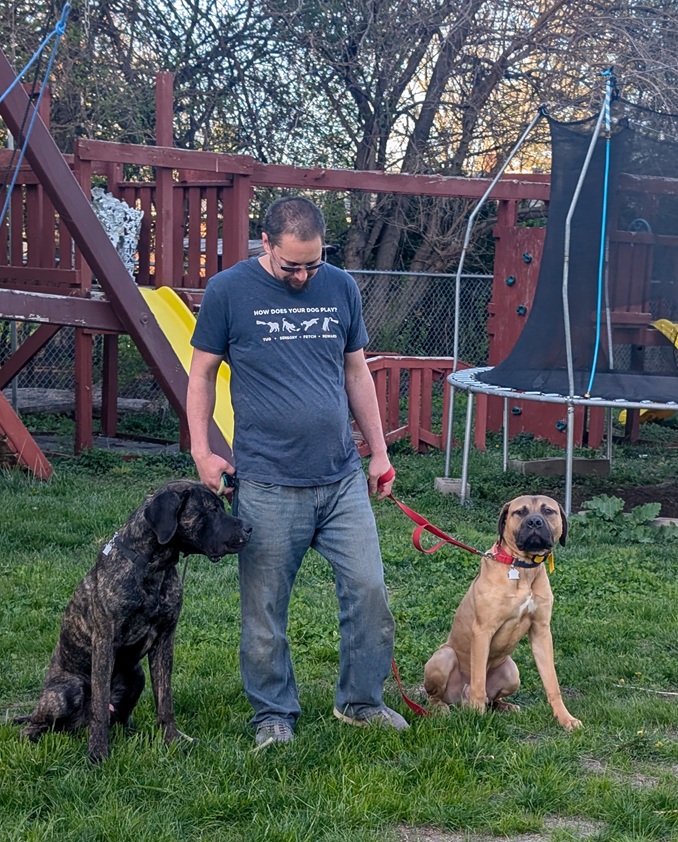
People who have multiple dogs who need training also often find board and trains to be the best option. Having a dedicated trainer work with each individual dog as well as with all the dogs together can ensure all the dogs are responding to the same commands.
Finally, a board and train is often the best choice for dogs struggling with aggression and reactivity. Working one-on-one in a calm, controlled environment often has the best results for reducing reactivity or aggression.
Board and trains are not well suited to dogs with high medical needs or dogs who weigh less than ten pounds.
Each board and train with The Dog Trainer Near Me also comes with one or more private lessons (depending on the package) and dogs who successfully graduate from our training programs will have exclusive access to our Alumni Reunion group classes for a full year after.
What Type of Training Should You Choose?
Which one of the different types of training is right for you? That’s something that both you and your trainer will need to discuss. Some behaviors are better suited to certain programs more than others.
When looking at different options, make sure you get to talk to or meet the trainer first, and ask questions about why they recommend one training over the other. Understand that most dog trainers are trying to give you the best recommendation for your dog based on years of experience with many dogs and what they’ve seen work best. And if you have questions, always ask!
Check in next week for an overview of Private Lessons.


Leave a comment