There’s a lot of different training options for dogs: group classes, private lessons, board and train. It can be confusing and hard to know what’s best for your dog. Over the past month, I’ve been going over what each one of these is, and how to figure out which one best fits your dog and lifestyle.
I’ve been on both sides of training, as a dog owner and as a trainer, and have used and taught in all three types of training. Not every option is right for every dog, and likewise not every trainer is right for every family.
Here’s a quick, and very generalized, break down before we start our final deep dive.
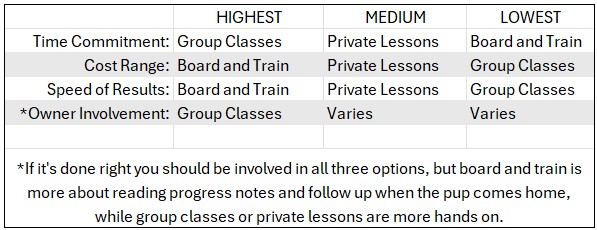
Beginner Classes
Group classes fall into two categories and should be considered as two separate things. I’ll talk about the beginner groups first.
Beginner group classes are best for puppies or very social dogs that only need to learn the basics. They are a fantastic way to introduce your dog to command work at a lower price point. In group classes both the owners and dogs are learning at the same time. It can be a higher distraction environment, so very energetic or easily overwhelmed dogs might find it more difficult. However for some dogs and people, the social aspect of working in a group with others can be more fun and motivating.
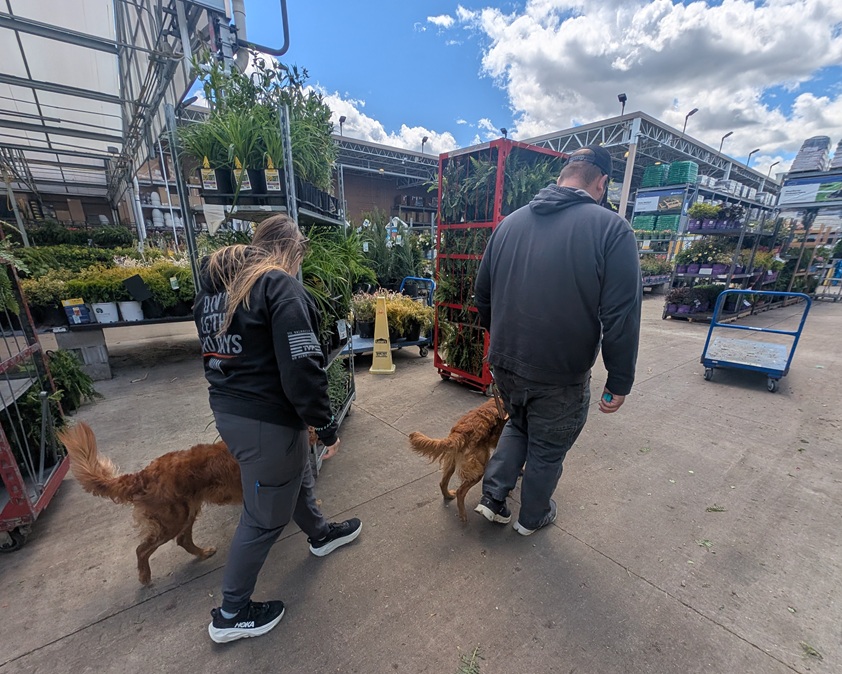
You will be with others in a class, so it’s not as customized or individual. The date, time, and location are already set, so busy people often find it less convenient. Typically reactive and aggressive dogs shouldn’t be placed in a basic group class, as they need more one on one time with the instructor. If a pup’s human family is not able to spend the time needed training, then a dog might not be able to graduate to more advanced classes.
Like the private lessons, there is a time commitment both for going to the class as well as training every day between lessons. Consistency is key. If you can commit to that, you can be very successful in a basic group class.
Group classes might also be a good fit for owners who have already had previous dogs go through a board and train or private lessons, but who have an additional dog who is social and easy to handle.
Advanced Classes
What are advanced group classes?
Advanced group classes are a continuation from any one of the three main types of training already discussed. You’re working around dogs that should have successfully completed basic training and are in control around other dogs and people.
In control doesn’t necessarily mean friendly, so there may be reactive dogs in an advanced class. They should be able to peacefully coexist without fear of an unsafe reaction to other dogs or people. Some dogs may be wearing muzzles as a precaution, or using other advanced handling tools.
These classes can focus on following up on perfecting basic commands, working on advanced skills, dog sports, or any number of things. However, you shouldn’t be joining an advanced class until your dog knows the basics. If you aren’t sure whether or which advanced classes would be a good fit for you and your dog, our trainers are always open to discuss the options with you.
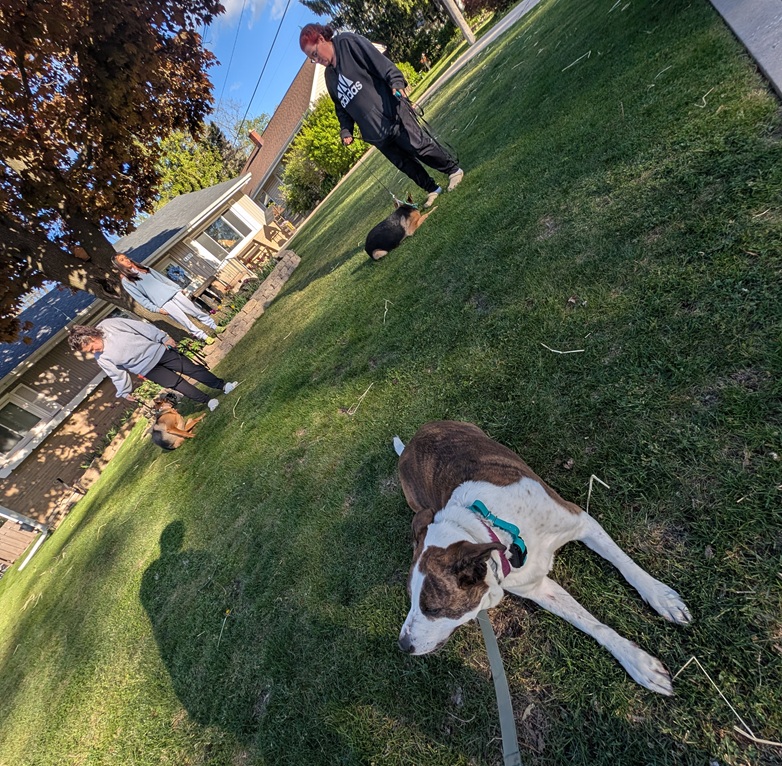
The cost and time commitment will vary in advanced classes depending on the type and number of classes. We have several different types. Our alumni reunions rotate through different topics and locations. Some focus on refreshing or practicing skills already learned, others increase distraction level or allow for training around other dogs and people.
Our agility, confirmation, or sports stretching classes teach those respective topics. Those classes have a set structure, but are usually done in very small groups so there is some flexibility with the pace of each class.
An advanced group class can be about learning new skills, but it can also be about keeping you and your dog in good communication with each other.
What Type of Training Should You Choose?
Which one of the different types of training is right for you? That’s something that both you and your trainer will need to discuss. Some behaviors are better suited to certain programs more than others.
When looking at different options, make sure you get to talk to or meet the trainer first, and ask questions about why they recommend one training over the other. Understand that most dog trainers are trying to give you the best recommendation for your dog based on years of experience with many dogs and what they’ve seen work best. We are always open to questions.
Now you’ve learned about Board and Trains, Private Lessons, and two types of Group Classes, which one is best for you and your dog? Contact one of our trainers today to discuss the best options for your unique situation!


Leave a comment